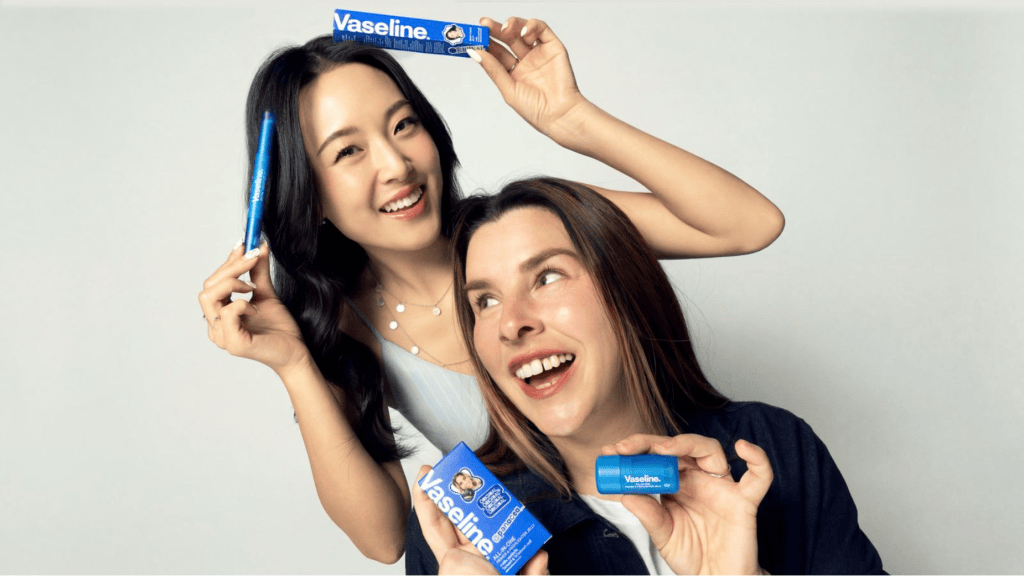
Despite its long established brand heritage, Vaseline demonstrates a strategic transition towards collaborative marketing by integrating creator and community insights into product innovation and future brand development. Does this approach genuinely empower creators, or simply commercialise their ideas?

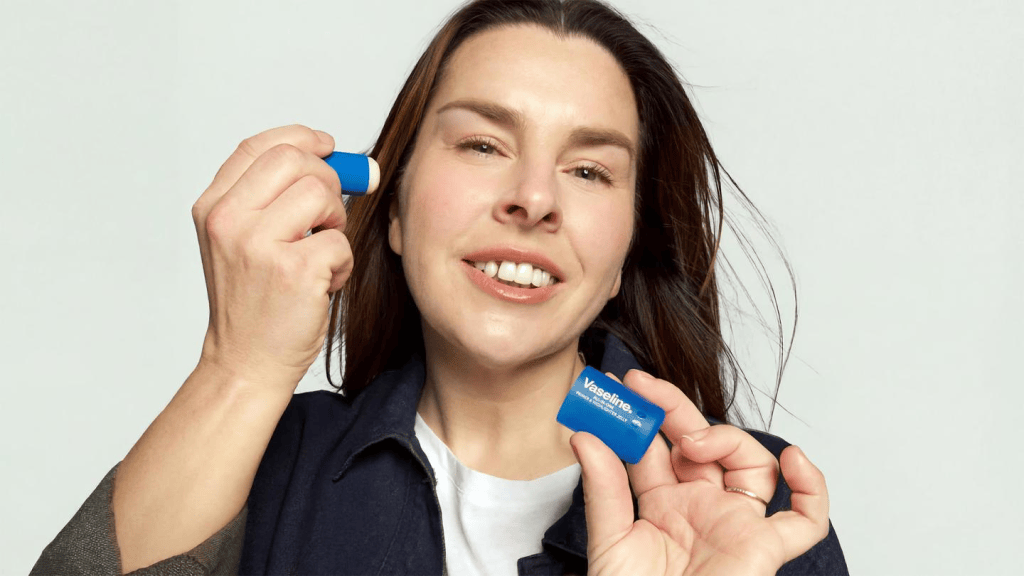
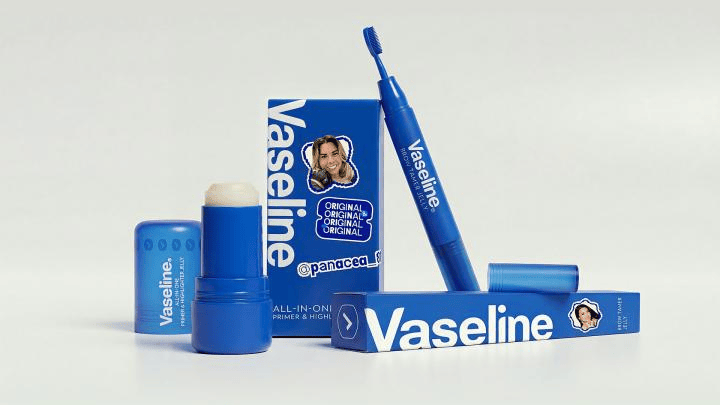
In 2008, beauty creator Jen Chae shared a simple hack for taming eyebrows with Vaseline jelly on her blog, and Lauren Luke, one of YouTube’s earliest beauty creators, shared her own version as a makeup primer, with Ogilvy dating both hacks to 2008. Both went uncredited by the brand, and WPP’s case study notes such creators were left without credit, ownership or a share of the value they created. That changed with Vaseline Originals. In 2026, Campaign Brief Asia reports that their ideas inspired the Vaseline Brow Tamer and All-In-One Primer & Highlighter Jelly, with both women recognised as “Vaseline OGs”. Campaign Brief Asia Ogilvy Singapore found both women, credited them and turned their ideas into two co-created products, which sold out within minutes of their TikTok Live debut on 30 March 2026. WPP reports the products outsold classic Vaseline Jelly by 466%, and the campaign won a Cannes Lions Gold plus multiple Silver and Bronze Lions. It also took the inaugural APAC Grand Prix at the 2026 Global Influencer Marketing Awards. It is a useful stress test for the two course models because the campaign moved in a direction neither fully anticipates.
A value chain running in reverse
Libai et al.’s (2025) framework, published in the peer-reviewed Journal of the Academy of Marketing Science, explains influencers’ contributions to a firm’s Customer Value Chain. Vaseline Originals connects three elements of the Marketing Mix: Chae’s brow-taming hack and Luke’s primer technique informed Product development, their TikTok Live participation supported Promotion, and TikTok Shop provided Place through direct purchasing. Translating these routines into convenient formats potentially strengthened Customer Perceived Value and encouraged Acquisition. Yet the innovations preceded the partnership, resembling von Hippel’s (1986) lead user research in Management Science, which identifies users experiencing emerging needs as sources of novel concepts. This similarity does not establish that either creator meets every lead-user criterion. Cova and Dalli’s (2009) “working consumer” concept, published in Marketing Theory, further explains how their original tutorials generated cultural and affective value through immaterial labour outside the brand’s control. Vaseline’s co-creation and revenue sharing subsequently recognised this contribution commercially. However, compensation alone cannot demonstrate equitable distribution without disclosed payment terms, just as launch sales cannot establish Customer Equity without evidence of repeat purchasing. The campaign therefore illustrates both the commercial potential of community innovation and the limits of judging fairness and lasting value from initial results.
A role assigned after the fact
Rundin and Colliander’s (2021) typology, published in the Journal of Advertising, classifies influencers as spokespersons, cocreators or co-owners, with consultant and codesigner as cocreator subroles. It was built from a netnography of 21 fashion influencers’ brand collaborations. Chae and Luke created their hacks long before any partnership, yet their ideas shaped the products and their stories anchored the communication, so they sit closest to codesigners. WPP confirms their faces and stories appeared on packaging alongside a revenue share. The limitation is that a typology built on existing collaborations misses influence that emerges before a partnership begins. Stremersch et al.’s (2025) customer insights framework fills that gap better: its ten domains include crowdsourcing, co-creating and observing, and its survey of 305 managers found firms underuse crowdsourcing and co-creation despite their positive link to innovation performance.
Key Takeaway
Vaseline Originals worked because it broke the sequence both models assume: value started with two creators outside any contract, and a role was assigned only once their influence already existed. Credit and revenue sharing is what separates this from the unrewarded labour Cova and Dalli warn about. Before applying either framework to a campaign, check which direction the value actually travelled.
AI Acknowledgement
I used ChatGPT to refine wording, improve the clarity and structure of my writing, and correct grammar and spelling.



Leave a Reply