- Introduction
- The Billion-Dollar Rise Built on Borrowed Trust
- Social Publishing Meets Social Commerce
- STEPPS: Why the Dupe Content Travels
- Captions and Hashtags as Amplifiers
- Legal and Ethical Implications for Marketers
Introduction
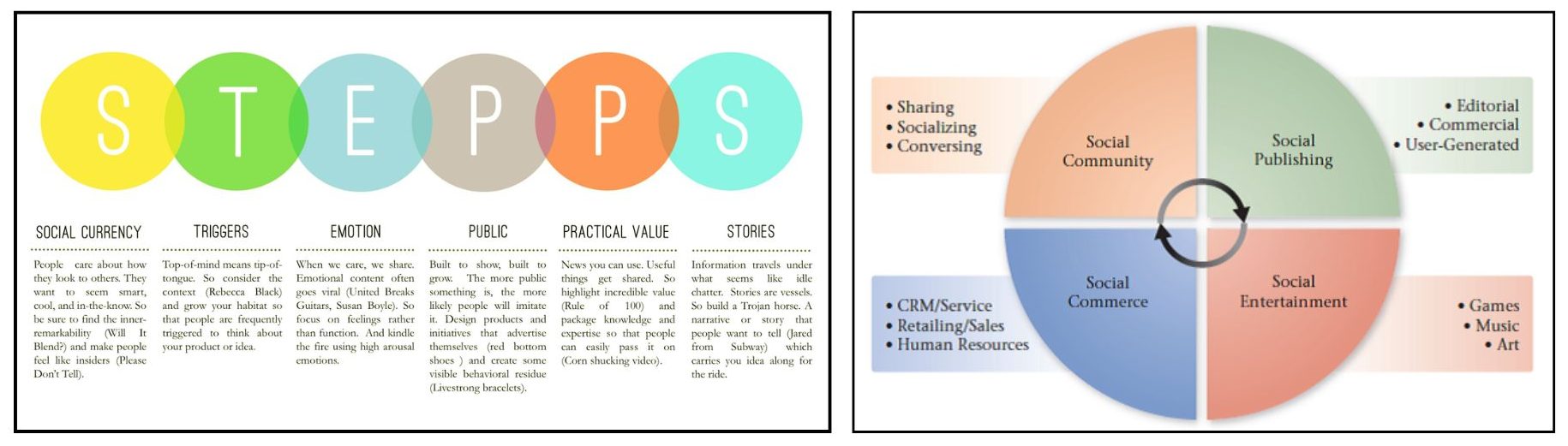
MCoBeauty’s dupe strategy is best understood not only as a legal dispute, but also as a case study of how content spreads and where it sits across the social media ecosystem. Tuten’s (2021) Social Media Four Purposes framework maps creator content across community, publishing, commerce and entertainment, while Berger’s (2013) STEPPS framework in Contagious: Why Things Catch On explains why the same content becomes widely shared. Applied together, these frameworks reveal both the mechanics behind MCoBeauty’s rise and the risks embedded in its influencer strategy.
The Billion-Dollar Rise Built on Borrowed Trust
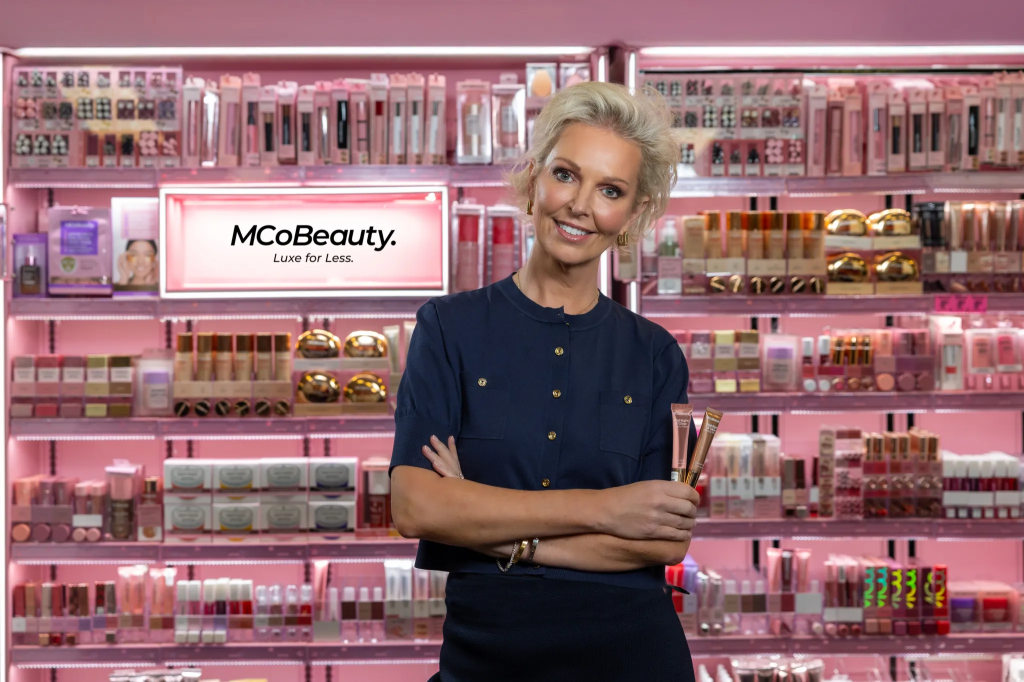
According to Forbes Australia (2025) and Retail Beauty (2025), MCoBeauty has become one of Australia’s biggest beauty success stories, reaching a valuation of more than $1 billion in early 2025 and forecasting $300 million in revenue for the financial year. Much of this growth rests on borrowed trust, with independent creators comparing MCoBeauty products to prestige originals from Sol de Janeiro, Glow Recipe, Charlotte Tilbury, Dior, Fenty Beauty and Huda Beauty. But what happens when borrowed trust begins to look like brand-controlled promotion?
Social Publishing Meets Social Commerce
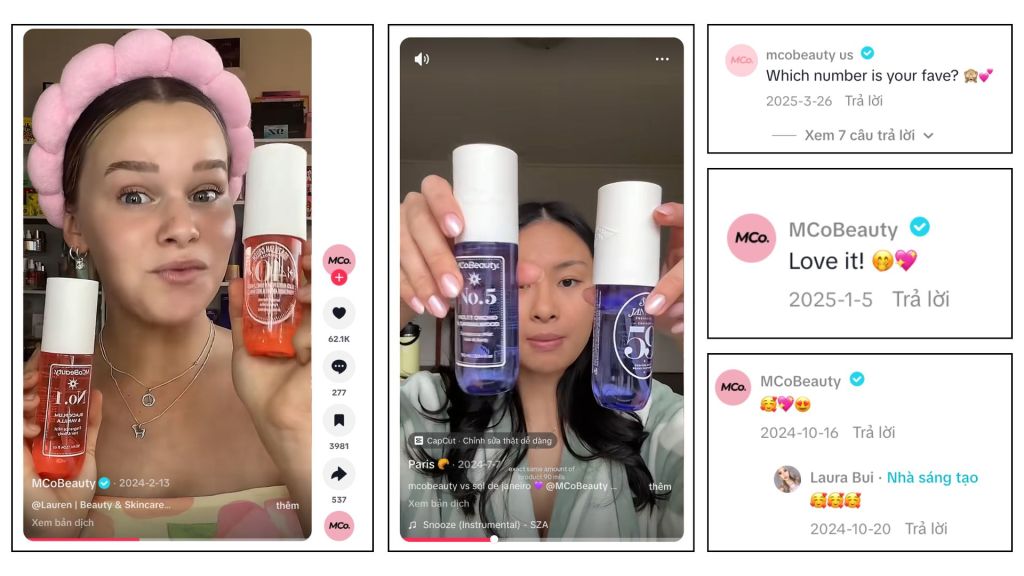
Under Tuten’s (2021) framework, most MCoBeauty dupe content begins as Social Publishing, specifically user-generated content. Independent creators post comparison videos and reviews with little brand control, giving them a Stylist-like voice that audiences trust more than formal advertising, reflecting Rundin and Colliander’s (2021) influencer roles typology in the Journal of Advertising. Libai et al. (2025), writing in the Journal of the Academy of Marketing Science, identify this positioning function, communicating product value through perceived authenticity, as the core mechanism of the influencer value chain. However, once MCoBeauty likes, comments on, or reposts this content, as Sol de Janeiro’s amended complaint alleges, the same material shifts toward Social Commerce, functioning simultaneously as Retailing/Sales and CRM by driving purchase intent and shaping brand sentiment in real time. This dual function, content that reads as independent publishing while operating commercially as social commerce, is precisely what FTC (Federal Trade Comission) endorsement guidelines and Sol de Janeiro’s lawsuit target.
STEPPS: Why the Dupe Content Travels
Berger’s (2013) STEPPS framework identifies six drivers of sharing, several of which map directly onto MCoBeauty’s playbook. Practical Value is central: creators frame dupes as a way to save money without sacrificing quality, aligning with Statista’s research on Australia’s beauty and personal-care market, which identifies product quality and low prices as key purchase criteria for Australian consumers. Social Currency operates alongside it: @laurenilord’s claim that a $20 MCoBeauty mist “smells exactly” like Sol de Janeiro’s $40 Cheirosa original signals insider knowledge and good judgement, making her appear savvy rather than cheap. This effect is supported by Stubb et al.’s (2019) peer-reviewed study in the Journal of Communication Management, Andonopoulos et al.’s (2023) experimental research in the Journal of Retailing and Consumer Services, and Pan et al.’s (2025) research on influencer credibility and consumer engagement.
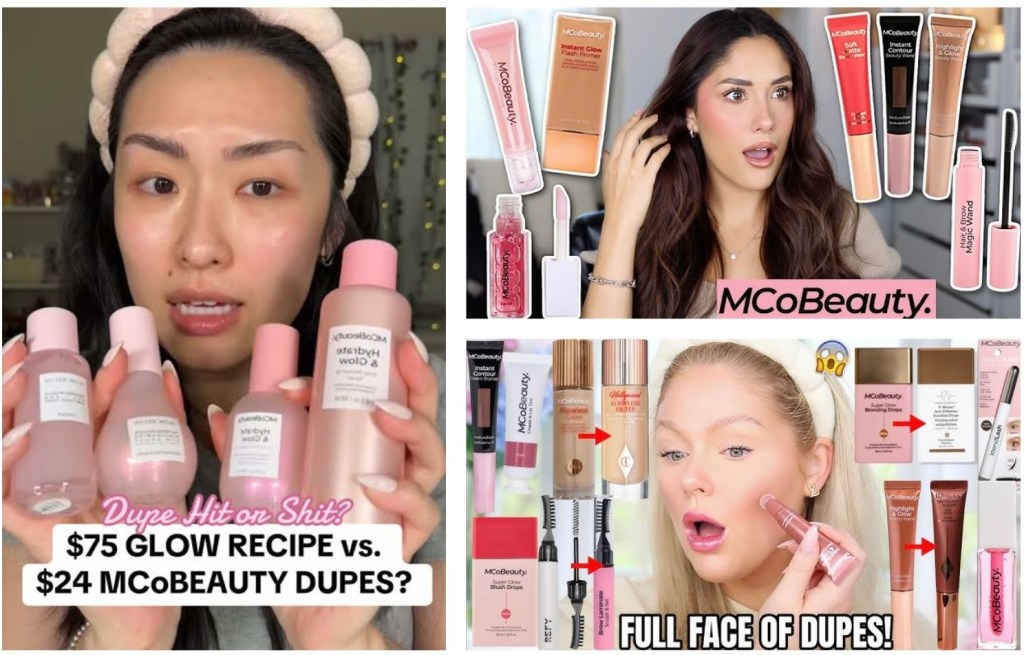
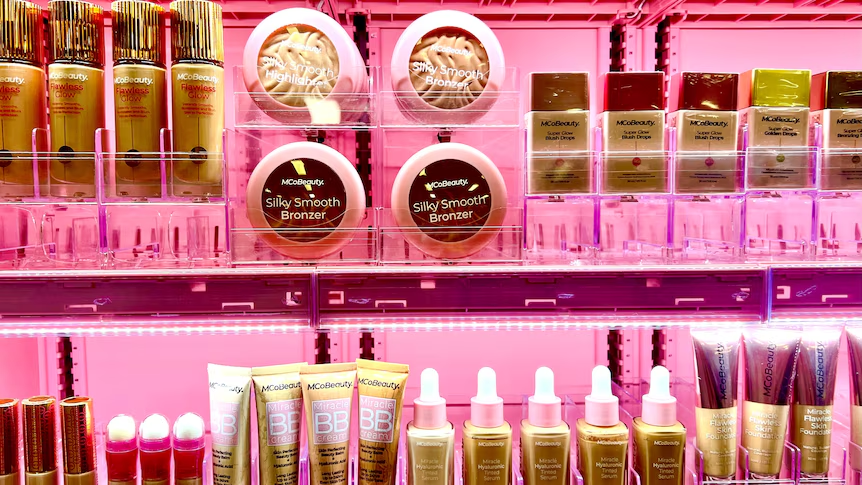
Public visibility strengthens both forces, as juxtaposed packaging and price points invite screenshots and replication. Emotion adds momentum: discovering a near-identical alternative sparks the high-arousal response Berger (2013) associates with social transmission. Combined, these mechanisms clarify why Business Insider’s (2023) report that 71% of Gen Z and 67% of millennials sometimes or always purchase dupes demonstrates authentic market appetite rather than engineered buzz. Ultimately, MCoBeauty transforms affordable imitation into something practical, recognisable, exciting and status-enhancing.
Captions and Hashtags as Amplifiers
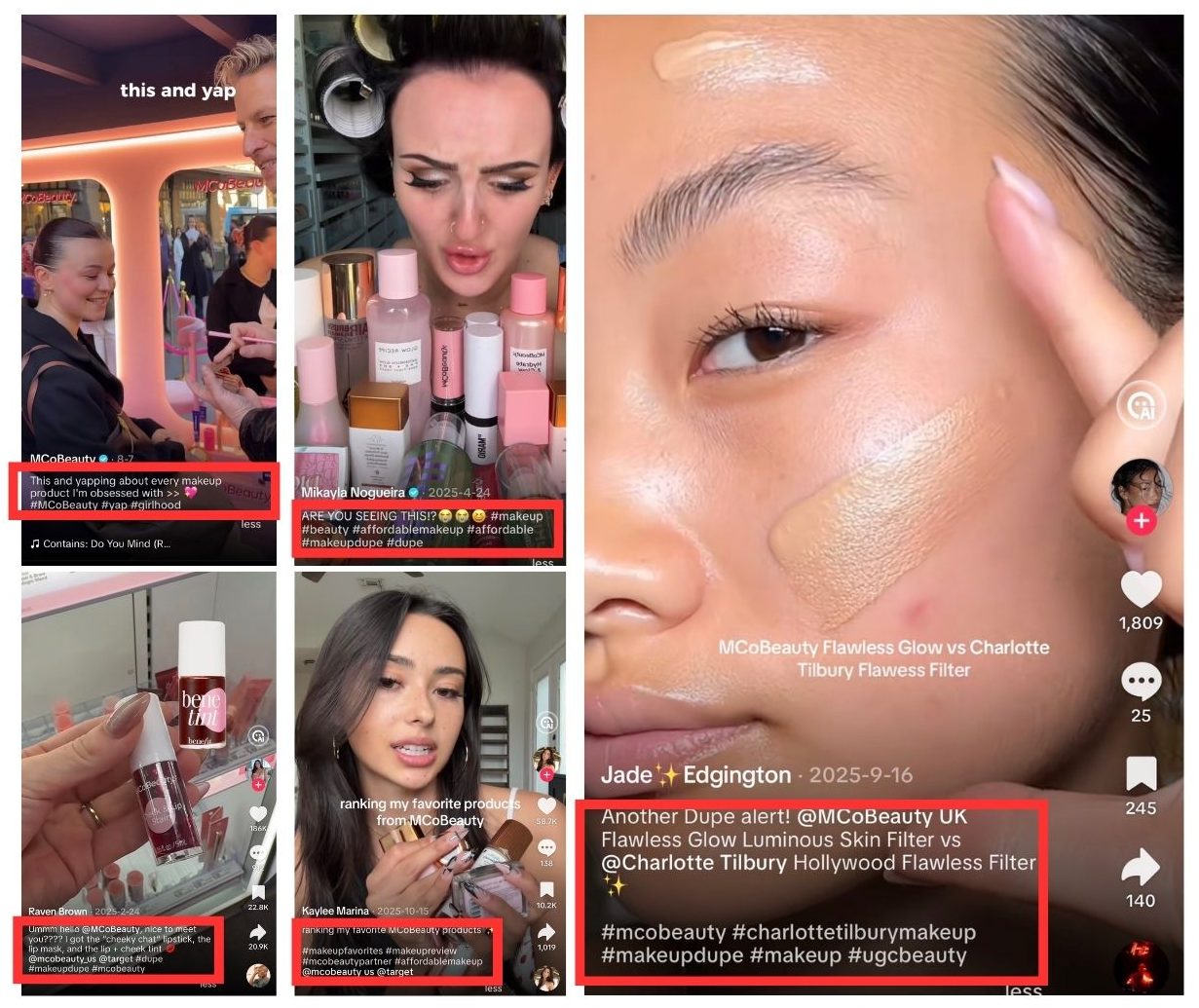
Effective caption writing begins with a strong hook that communicates value before the remaining text is hidden. Lee’s (2024) study in the Journal of Hospitality & Tourism Research emphasizes hat withholding some information can create curiosity, encouraging audiences to seek further details and engage with branded content. Similarly, Adam’s (2025) research in the Journal of Interactive Marketing finds that strategically extending captions beyond what an image directly reveals can increase consumer interest and engagement, including comments.MCoBeauty-style dupe content typically front-loads the scent or price comparison in the hook, then applies Hodder’s (2023) 3×3 hashtag structure covering the audience, product and customer problem: for example, #girlhood and #beautycommunity for who, #mcobeautydupe or #makeupdupe for what, and #affordablebeauty for why. These hashtags compound the Public and Practical Value triggers identified in STEPPS by making the comparison discoverable to shoppers already searching for savings, extending the content’s reach well beyond a creator’s existing followers.
Legal and Ethical Implications for Marketers
The case sets a precedent for how far a brand can engage with independent creator content before assuming legal responsibility for its claims. Evans et al.’s (2017) study in the Journal of Interactive Advertising shows that ambiguous disclosures make organic opinions difficult to distinguish from paid promotion. MCoBeauty deepens this ambiguity by liking, commenting on and reposting favourable comparisons. As a result, marketers should assess whether STEPPS-driven engagement that increases Public visibility and Social Currency could also make creator claims appear to be the brand’s own.




Leave a Reply